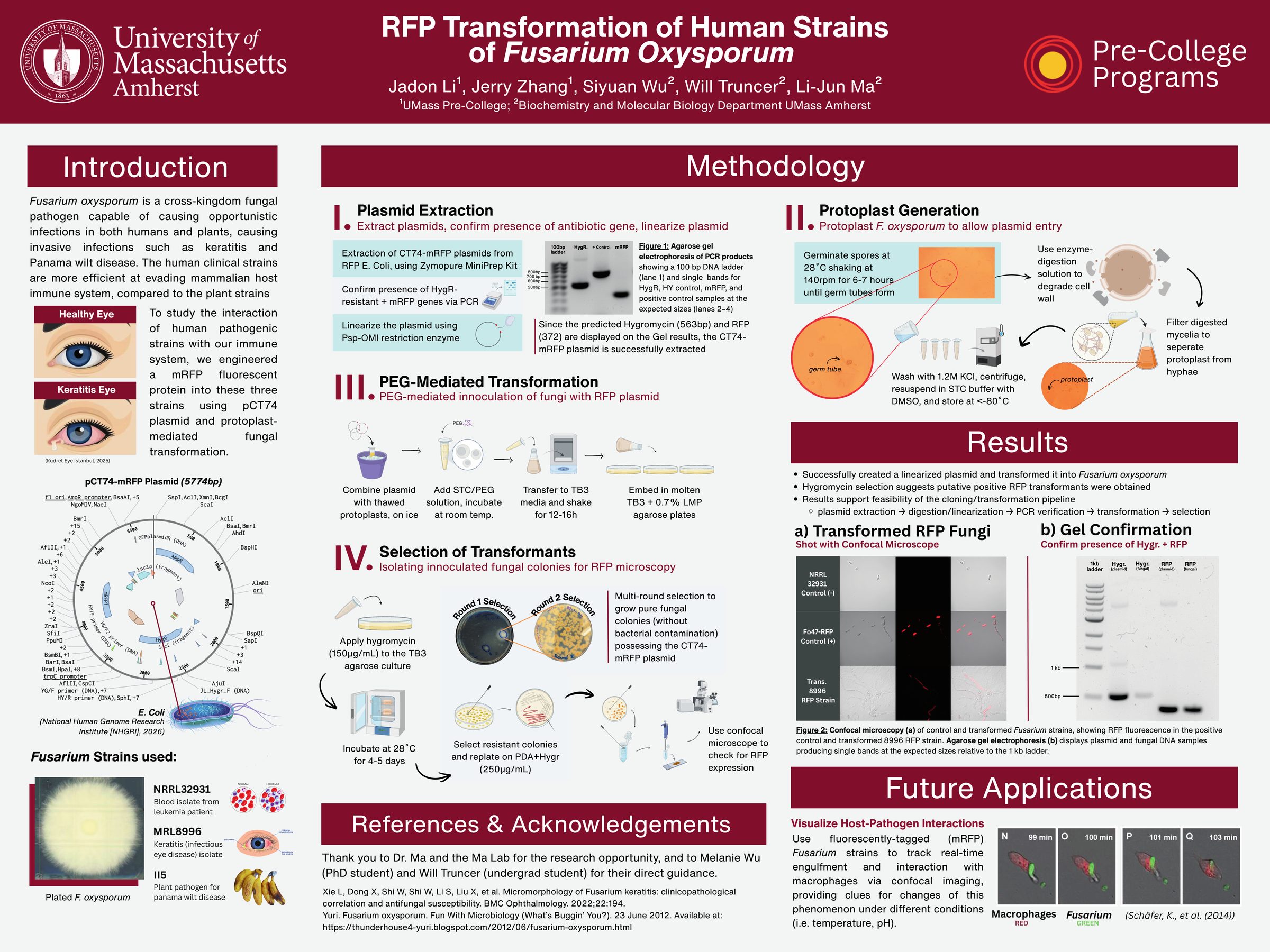
RFP Transformation of Human Strains of Fusarium oxysporum
Ma Lab, UMass Amherst — August 2026, with Jerry Zhang
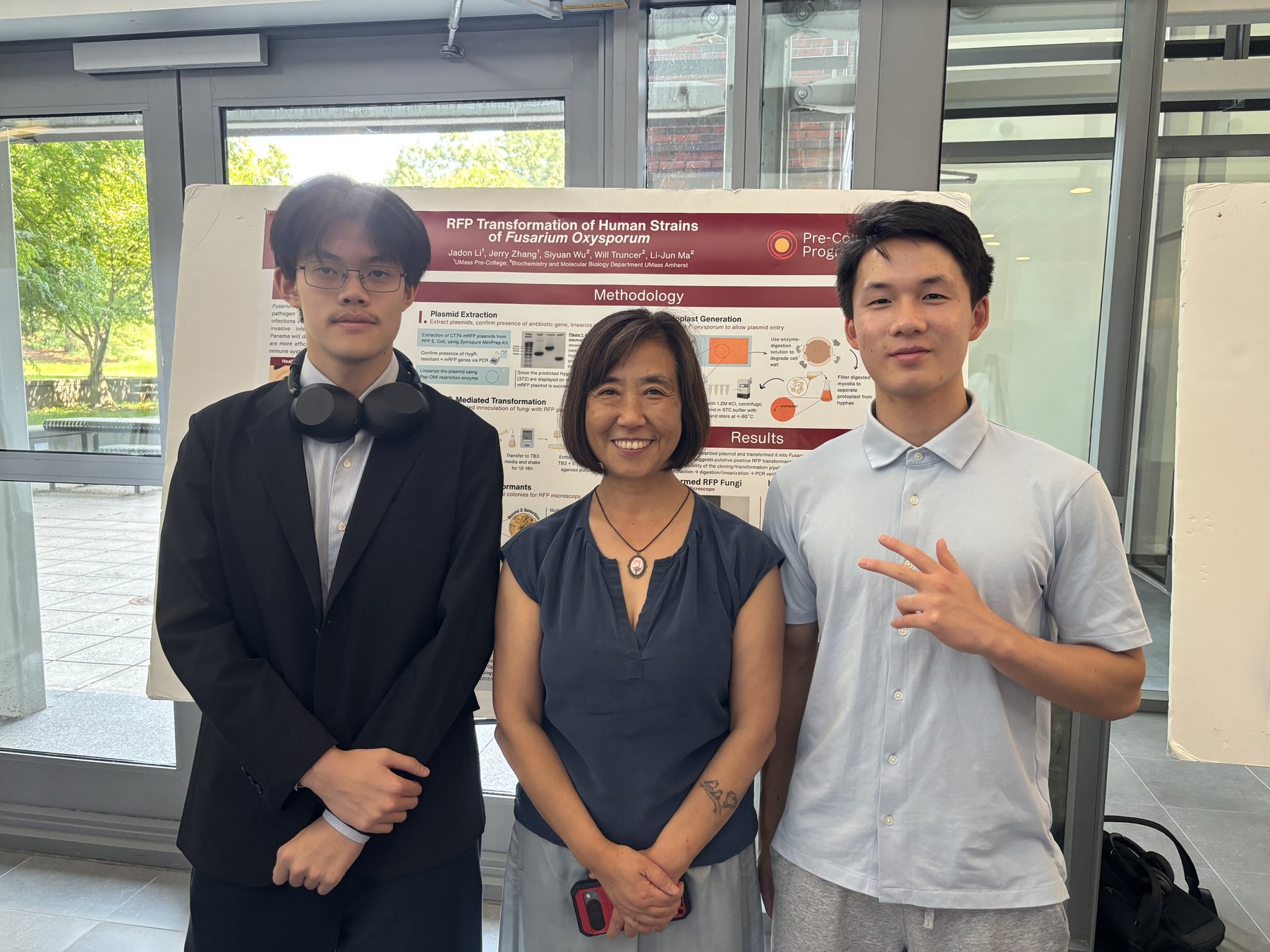
Six weeks in the Ma Lab at UMass Amherst, summer 2026.
Fusarium oxysporum blinds people and kills bananas — one fungus, two kingdoms. Its human strains slip past the immune system better than the plant ones do. You can’t study a fight you can’t see, so we put a red fluorescent protein into a human clinical strain, to watch what happens when a macrophage finds it.
Ma Lab, UMass Amherst — August 2026, with Jerry Zhang
ACSEF 2025 — 3rd, computational biology
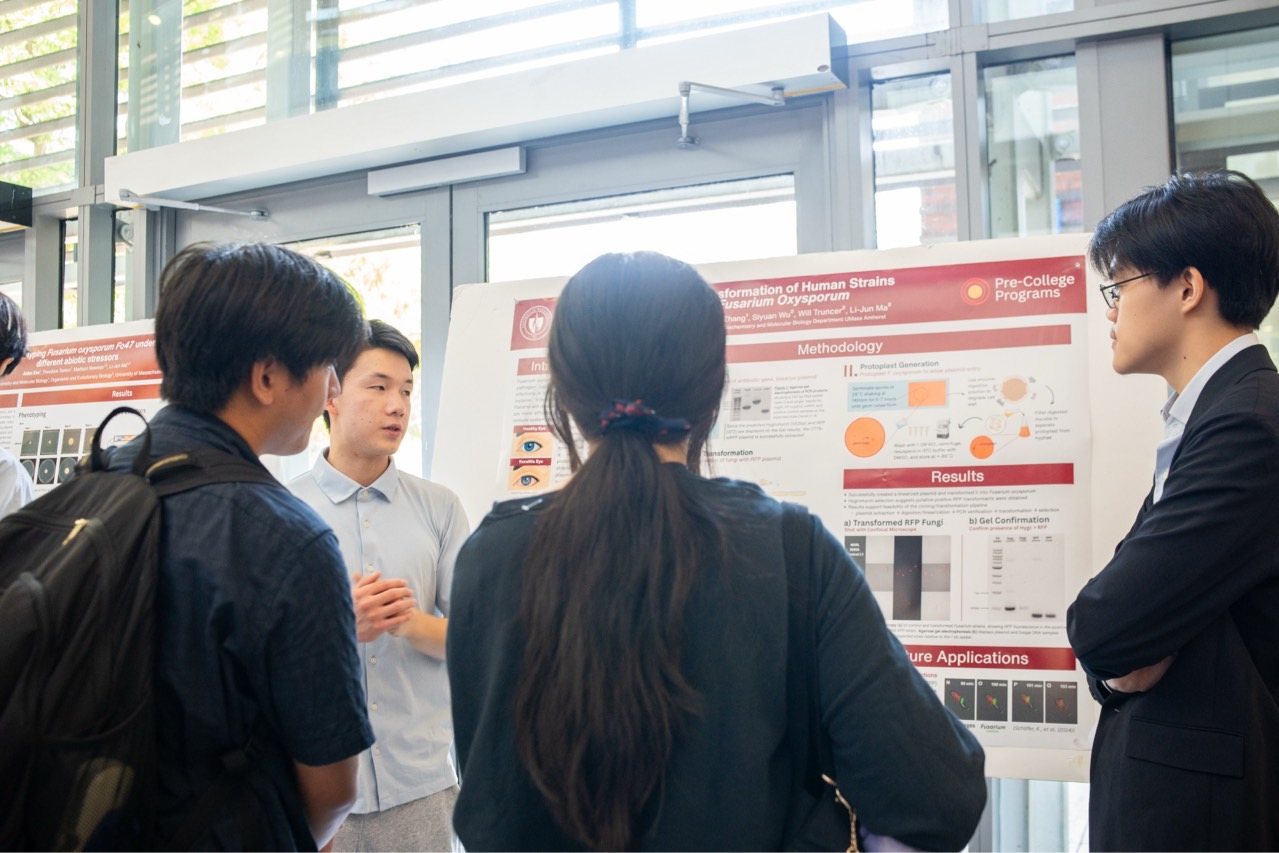
Hover a poster to read it close up. Click for full size.
Brightfield shows the fungus. The red channel shows only what carries the reporter. In strain 8996 they are the same object — and the negative control stays dark.
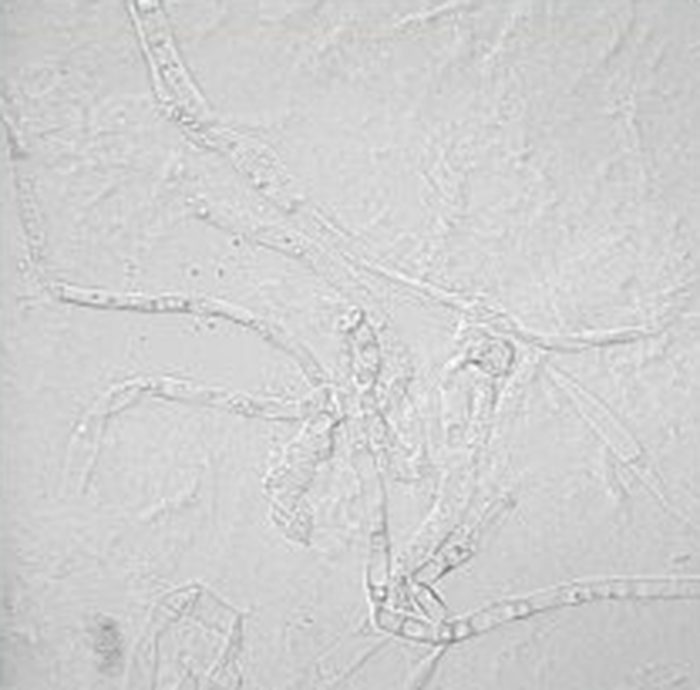
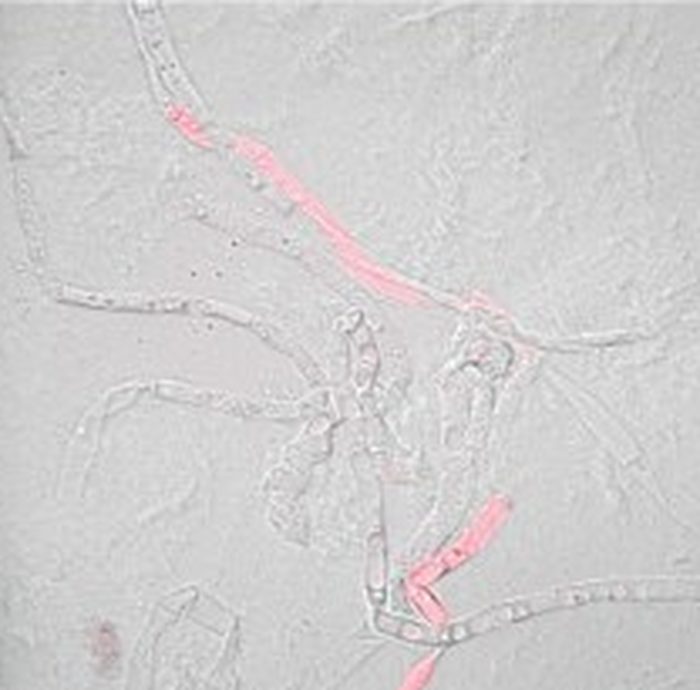 BrightfieldRFP merge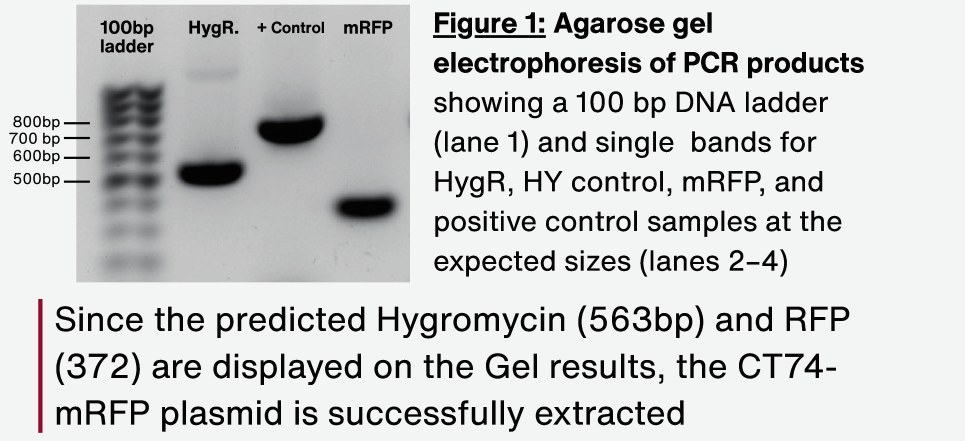
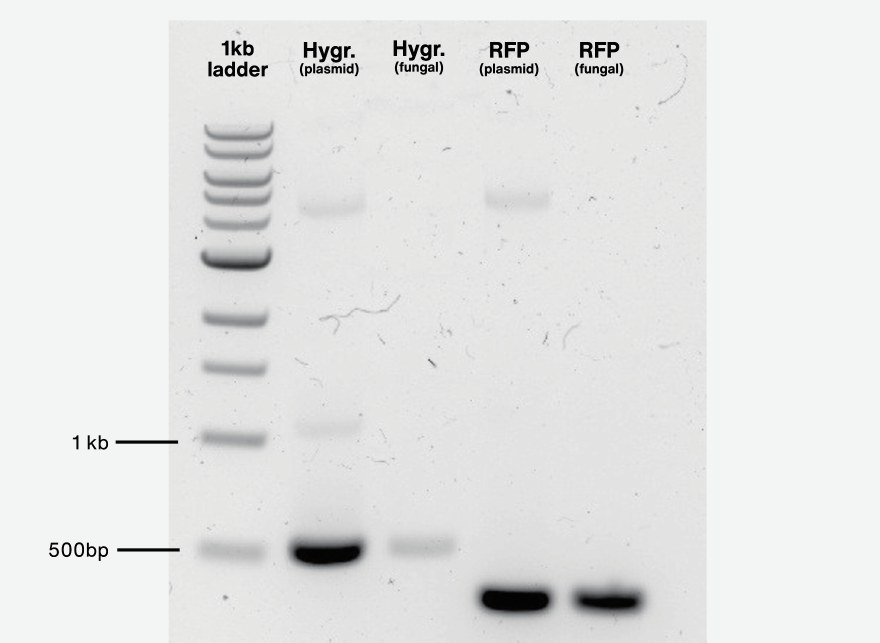
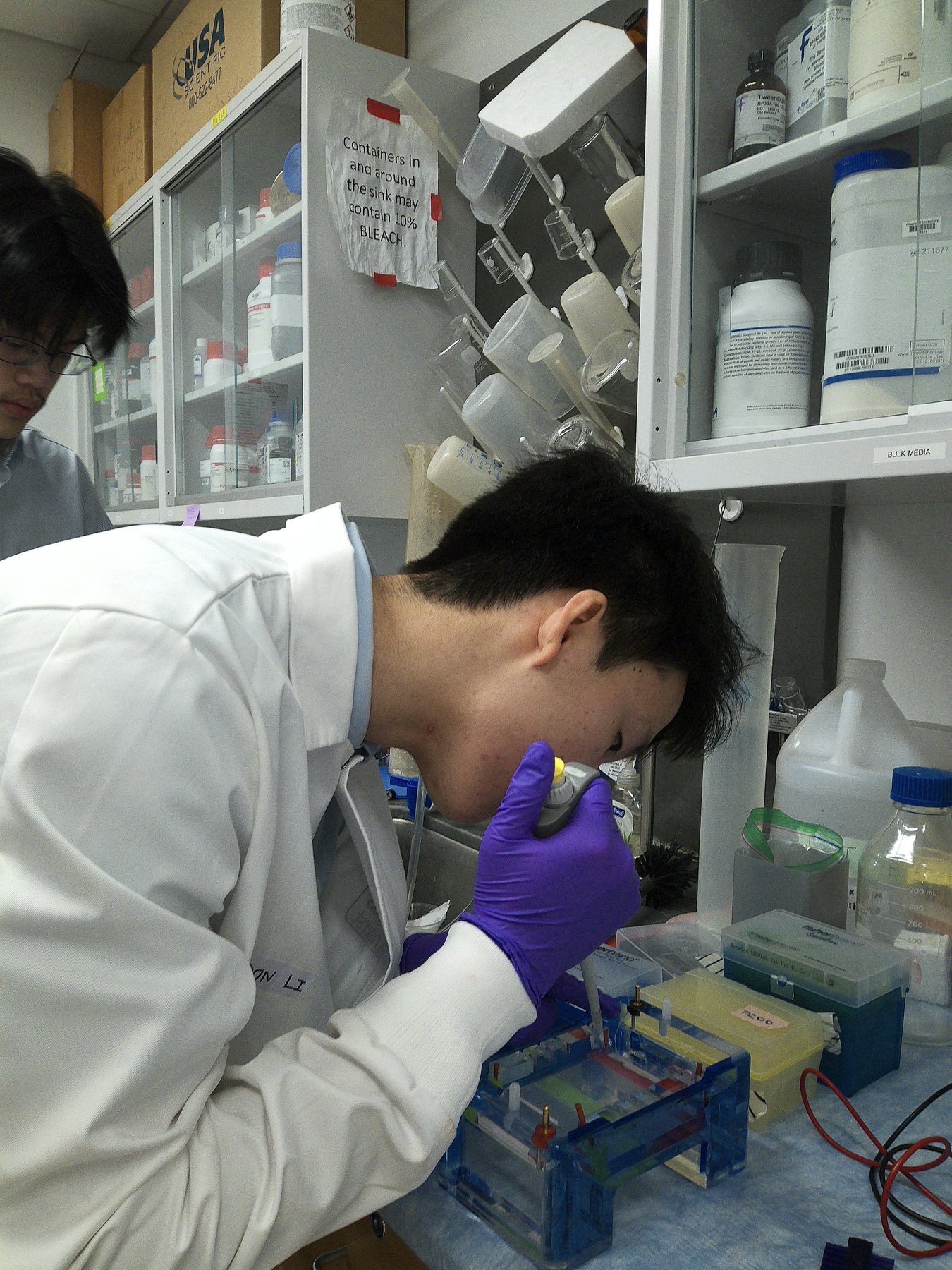
Nine to four every weekday, under a PhD mentor. Four steps, and each one exists for a reason — pick one.
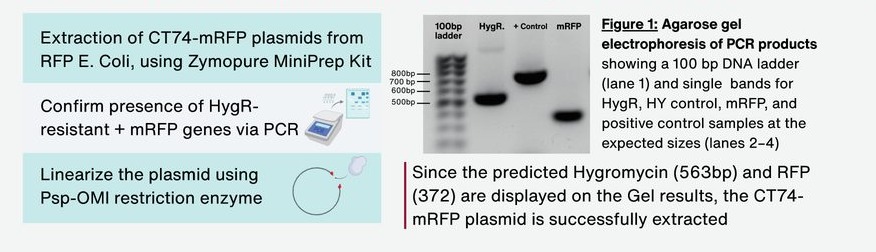
Circular plasmid has no free ends and won't replicate in Fusarium. Linearizing gives the construct ends that integrate into the fungal genome.
Pull the plasmid DNA out of E. coli and clean it up.
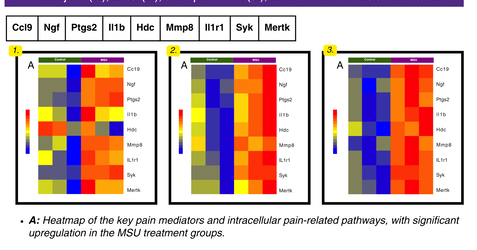
Both projects are the same problem twice: a pain signal you can only see in the transcriptome, and a pathogen you can only see once it’s tagged.
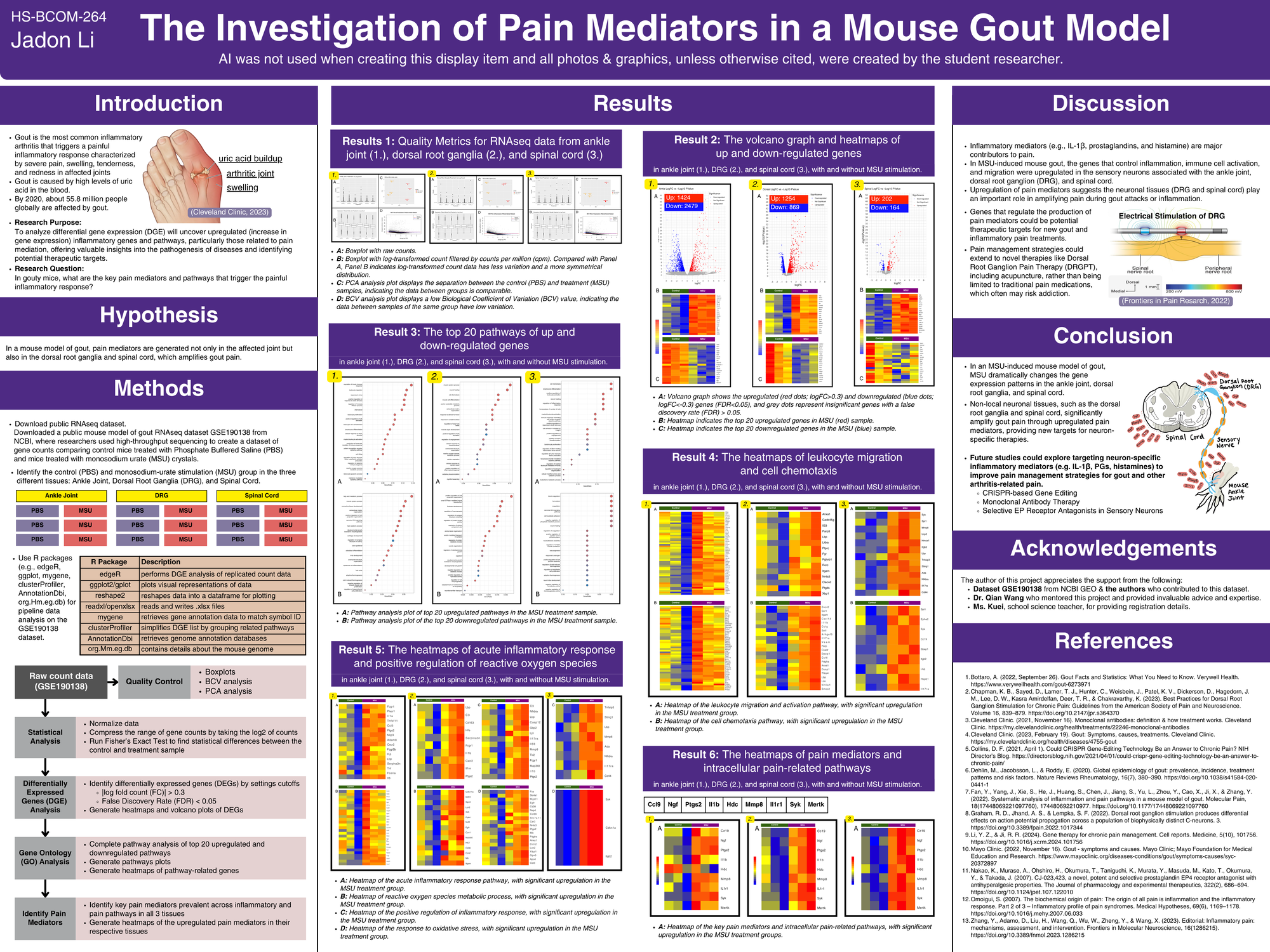
Healthy mice against gouty ones, three tissues, one RNA-seq pipeline in R.
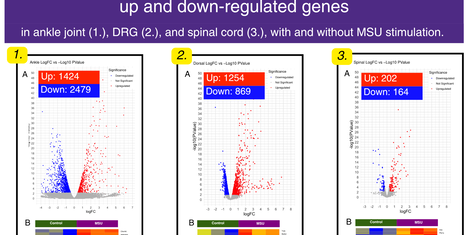
ankle joint
1424 up/2479 down
dorsal root ganglia
1254 up/869 down
spinal cord
202 up/164 down
They go up at the inflamed joint, and again in the dorsal root ganglia and spinal cord — the pain is amplified somewhere a joint drug never reaches.
chemokine — leukocyte recruitment